Our Services
Fiberglass Tank Repair has the ability to repair, modify, and reline fiberglass reinforced plastic (FRP) tanks. We can also perform tank inspections and develop recommended procedures for repairing deteriorated vessels. Our highly trained field personnel have years of experience with FRP tank repairs, modifications, and tank relining.

Nozzle Repair
Replacing
Our company has trained crew members certified for OSHA, MSHA, and are able to work with
nozzles and manways. If there is no existing nozzle then we can design a nozzle with
specified dimensions, a new tank inlet, and seal the internal components of the tank to ensure
the integrity of the structure. This helps alleviates any concerns of leakage of any stored fluids.
Installing
The new nozzle has been pre-engineered and will be installed as an integrated unit with a flange.
The layer is laminated into the tank to make it integrate with the tank's shell and its interior corrosion lining. To assure the nozzle’s service life, both the nozzle materials and the materials used to install the nozzle assembly are stored in a facility where the temperature is the same as the location of the tank.

Tank Relining
Tank Modifications/Retrofits
Tank modification can include the addition or removal of manways or nozzles to provide new functions for existing FRP vessels.
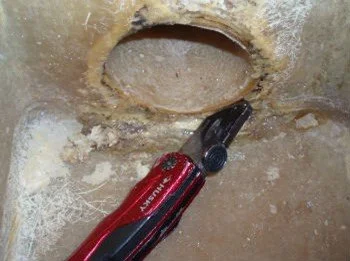

Tank Repair
Tank Repairs
Tank repairs can include minor patch work, tank restoration, coating, or relining. We repair fractures, cracks and delamination. Repairs should be performed before they escalate
into much larger repairs or failure.

Modifications

Relining
Fiberglass tanks are commonly used to store highly corrosive chemicals such as Sodium
Hypochlorite (NaOCl) and Sodium Hydroxide (NaOH) which are commonly found at
Water/Wastewater Treatment Plants. After time, the corrosion barrier of these vessels can
start deteriorating. However, the structural layers are usually more than satisfactory. Relining
the vessels can be a very cost-effective approach at providing many more years of operation for
FRP vessels. This process involves removing the corrosion barrier of the vessel down to a good
solid foundation in the structural layer and then providing a new corrosion layer.